 Russian
 -

Apple's New Paint Job: Thoughts on the Latest Event
Watching the Apple Event Like My German Neighbor Painting His Fence
I watched the Apple event out of the corner of my eye — the same way I watch my German neighbor repaint his fence every spring. Same fence, just shinier paint.
iPhone 17 Air: Now Sharp Enough to Slice Bread
So now we have the iPhone 17 Air. Air. Dust. Plastic salvation for humanity. It's the thinnest yet — perfect for slicing bread while doomscrolling TikTok.
Apple Watch Ultra 3: Talk to the Satellite
The Apple Watch Ultra 3 can now talk to satellites. Great. All that's left is for the satellite to start charging a monthly fee.
AirPods Pro 3: Your Pocket Cardiologist
AirPods Pro 3 now track your heart rate. I can already imagine the day they whisper, “You have tachycardia.” I’ll take them off, but they'll keep beating in the case.
“More Affordable Than Ever”: Translation Required
And all of this is served under the slogan “Now more affordable.” Which loosely translates to: “You’ll survive with last year’s model, peasant. Take out a loan and stop whining.”
Civilization is tired. Apple, however, is still joyfully painting that same old fence.
P.S. AAPL is crawling upward — I bought a little before the show.
-
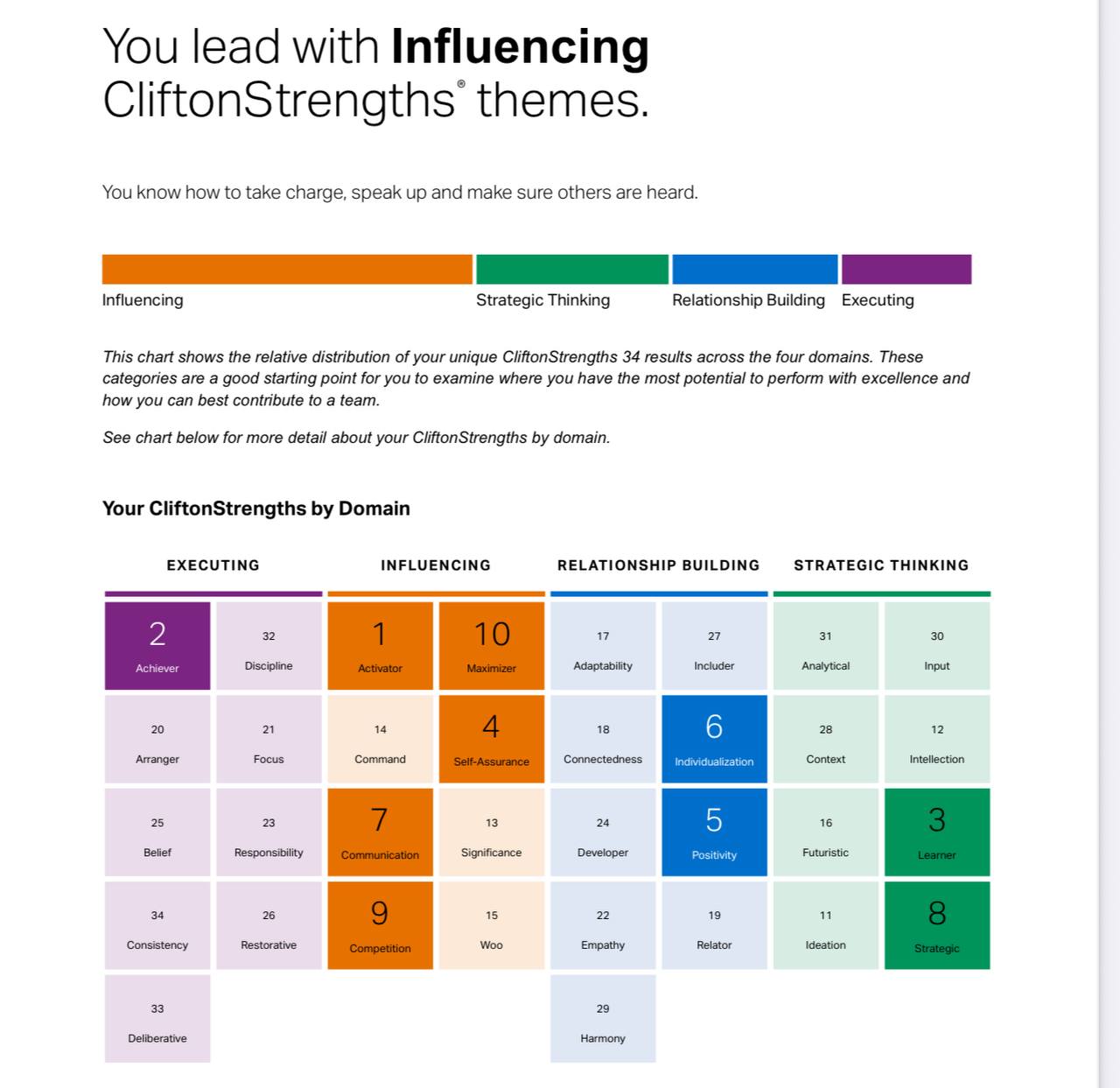
Why Playing to Your Strengths Drives Real Results
My Superpower: Turning Movement Into Momentum
My superpower is turning movement into tangible results — and inspiring others to come along.
According to CliftonStrengths, I'm an Activator and Achiever: I launch things, take the risk, and don’t stop until the goal is met. Combined with curiosity and optimism, this turns ideas into actual wins.
Why Strengths-Based Leadership Works
Leaders who lean into their strengths see up to an 8% increase in productivity and a 15% boost in team engagement (Gallup, 2016).
Focusing on talents improves life satisfaction and reduces burnout risk (Clifton & Harter, 2003).
Using your core strengths makes you more effective — and happier (Applied Psychology, Harzer & Ruch, 2012).
Build on Your Strengths — Not Your Weaknesses
It’s simply smarter to build a life and business around what makes you thrive — instead of constantly patching your weak spots.
So… what’s your superpower?
-
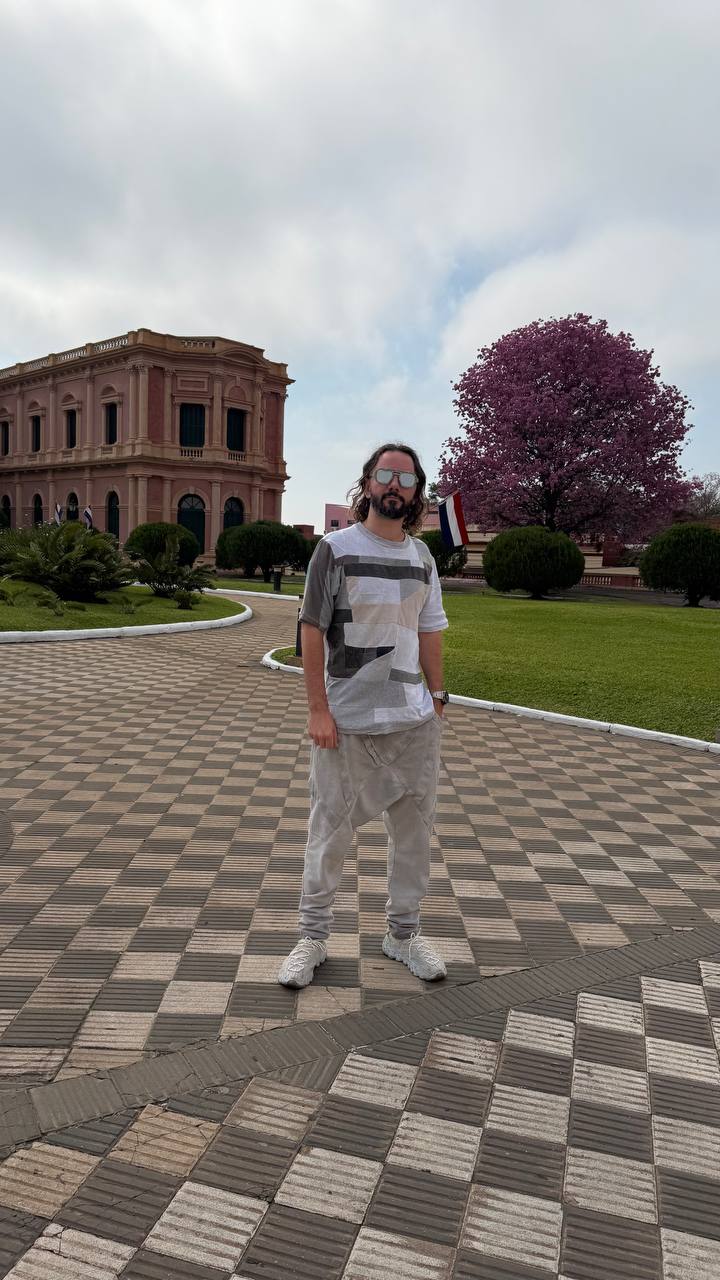
How Digital Nomads Can Choose Their Tax Residency
Tax Residency in a Borderless World
The modern world offers freedom of movement: today you're on calls from Barcelona, tomorrow you're in meetings in New York, and next month you’re at a retreat in Bali.
But when it comes to opening a bank or brokerage account, buying stocks, bonds, or physical assets — one question always comes up: where are you a tax resident?
Answering this wrong can be costly. Even if you're constantly on the move, any country might decide you belong to them — with all the tax consequences.
Don’t Let Tax Authorities Decide for You
What should digital nomads and global entrepreneurs do?
Don't leave tax residency up to a government inspector. Build it into your personal strategy for freedom.
Governments typically consider you a tax resident if:
— ты живёшь на территории более 183 дней в году,
— у тебя там центр жизненных интересов (семья, машина, бизнес, недвижимость).These are general rules, but each country has its own quirks. That’s why it’s essential to know where you legally become a tax resident.
Three Steps to Strategic Tax Residency
Choose your strategic tax base — a country that offers clear, favorable rules for residency.
Minimize double taxation through bilateral tax treaties (DTAs).
Consider your lifestyle. If you’re constantly on the move, make sure your "home jurisdiction" doesn’t require you to spend 9 months a year within its borders.
Why Paraguay Is a Hidden Gem for Nomads
A tip for the sharp-eyed: some countries get global citizens.
Paraguay grants tax residency to those who obtain permanent residence — and all it takes is one visit to apply.
There’s no legal requirement to live there full time, and the tax laws give you generous flexibility to plan.
The Benefits of Paraguay's Tax Residency
For frequent travelers, Paraguay offers an ideal setup:
- 0% tax on capital gains, dividends, and foreign salary
- No need to live in or even visit the country regularly
- Not part of the Common Reporting Standard (CRS) automatic tax info exchange
- Recognized, official tax residency statusA few years ago, most entrepreneurs would laugh at the idea of Paraguay in a tax context. Today, it’s no longer exotic — it’s a legitimate path to strategic freedom.
-
Europe backs wealth tax to fund healthcare and fairness
Wealth taxation is becoming a hot topic in Europe
Across the EU, citizens are increasingly calling for new taxes on the ultra-wealthy — supposedly to fund healthcare, education, and other public services.
Where is support the strongest?
Italy leads the pack: 94% of Italians support taxing the ultra-rich to improve the healthcare system.
Spain follows with 91%, then France (90%), the UK (89%), and Germany (85%).
What does the Eurobarometer say?
80% of EU citizens believe multinational corporations should pay a minimum tax in every country. And 65% support imposing taxes on the wealthiest individuals.
Support is especially high in Hungary (78%) and in Balkan countries like Bulgaria and Croatia (71% each).
Why do these ideas resonate?
Respondents want tax loopholes closed so more funding can go toward public services. That idea is backed by 94% in Italy, 91% in the UK, 90% in Spain and France, and 86% in Germany.
What gets less support?
Investing tax revenue into renewable energy gets a bit less enthusiasm — supported by 75–88%, with up to 18% of Germans opposed.
Even fewer people support funding for home insulation, with Germans particularly skeptical (only 28% in favor), and 20–22% against in other countries.
Are wealth taxes already in place?
Only Norway, Spain, and Switzerland currently tax net wealth.
France, Italy, Belgium, and the Netherlands tax specific types of assets.
What’s happening globally?
The G20 is discussing a potential global minimum wealth tax — 2% annually on assets over $1 billion.
Europe's direction: fairness or punishment for success?
Europe seems to be leaning toward punishing those who build capital (sound familiar?), instead of encouraging investment and growth.
-
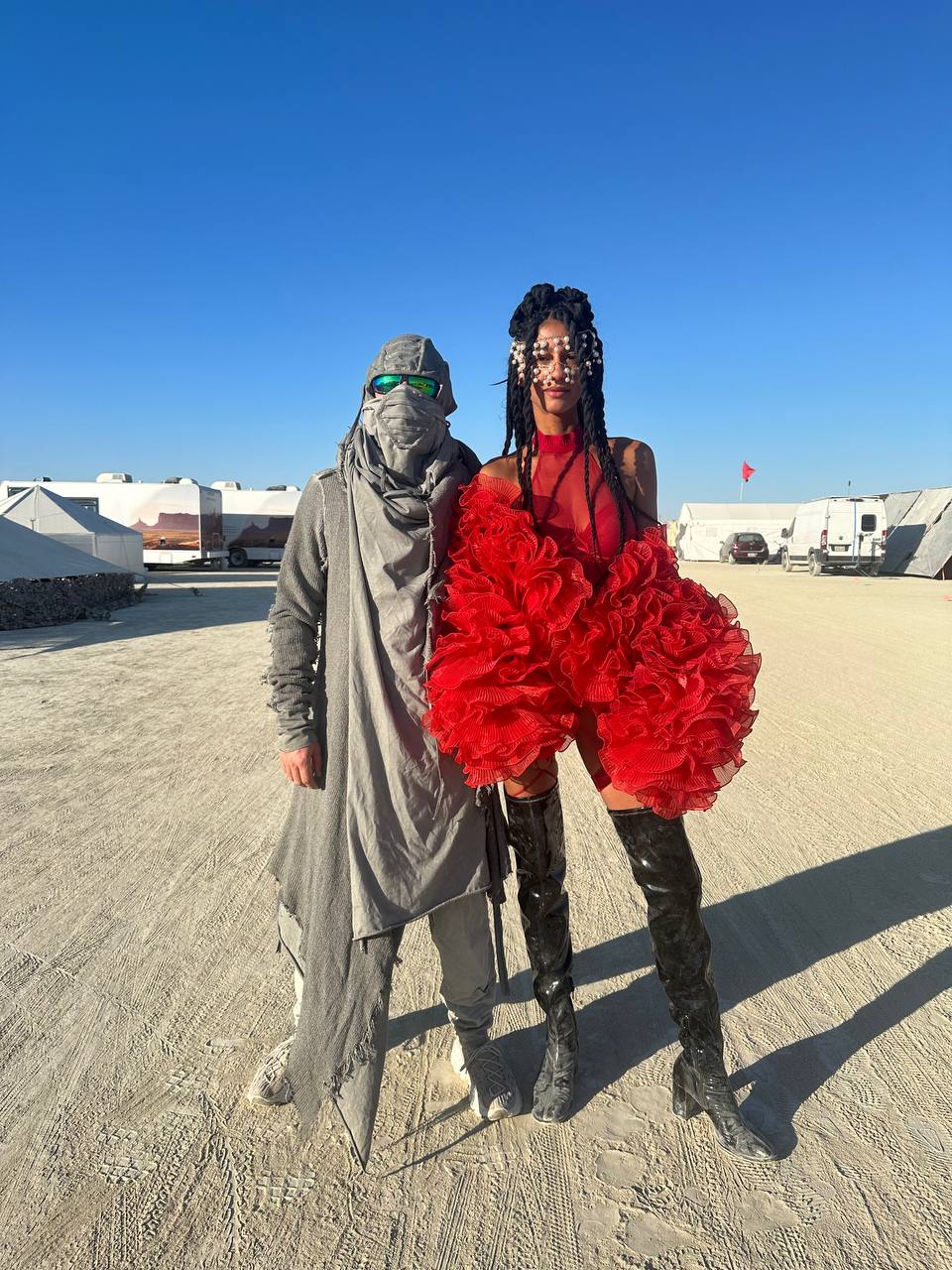
Burning Man Is Not a Festival — It’s a Desert Awakening
Burning Man is not a festival — it's a transformation
It's like if Stanford, a desert rave, a contemporary art exhibition, and an ancient shaman all merged into one being and decided to live through your inner transformation for you.
People who feel like dreams
I met a girl from Toronto who was convinced she was a witch. On the third day, she gave me a stone and said it vibrated on my frequency. Later we danced at sunrise to some kind of Japanese techno-house. The next morning, she left to find meaning in the desert. I never found her—or the meaning. But the stone remained.
Trust the toast and a glowing jellyfish
I met a guy who introduced himself as Alex but said here he’s “Star Cat.” He made me a mozzarella toast with the phrase “Trust the dust” burned into it. We sat under a glowing jellyfish sculpture and talked about blues. He turned out to be a developer from California and had the best chillout spot in camp.
Where strangers give compliments
One stop had a Compliment Bar. Strangers said kind things to other strangers they'd never met. Someone told me, "You look like someone who could be trusted with a galaxy." Two days later, I met a grandpa in a mermaid costume at the same spot.
A glowing cloak, a deer-bike, and a silent rave
I met a woman in her sixties who said it was her eighth time at Burning Man—because, here, men listen. She wore a glowing cloak and rode a bicycle shaped like a deer. She invited me to a silent rave—everyone had headphones on, but we were all still yelling. It was beautiful.
The art of unresolved pain
On the third day—eyes full of dust, electrolytes in hand, and baby mango puree for lunch—I met a guy who had lived in a monastery in Nepal for two years. Now he builds art installations shaped like emotional wounds he can’t let go of. One was a giant open hand with the words “Say it anyway.” We just stood there in silence.
When everything becomes unreal
At night… everything becomes surreal. Fire, lights, costumes, dancing, smells, dreams. Everything you thought you were begins to dissolve. And everything you feared most comes in for a hug. It's not scary. The desert is just showing you.
Fire, silence, and the ones you don’t take pictures with
Then it all burns. You stand in front of the giant burning Man, and inside, there's absolute silence. Not because there's nothing—but because there's peace.
I met people you don’t want to take pictures with. You just want to sit in silence beside them. No one writes about them in posts. But they might be the reason I’ll come back.
-
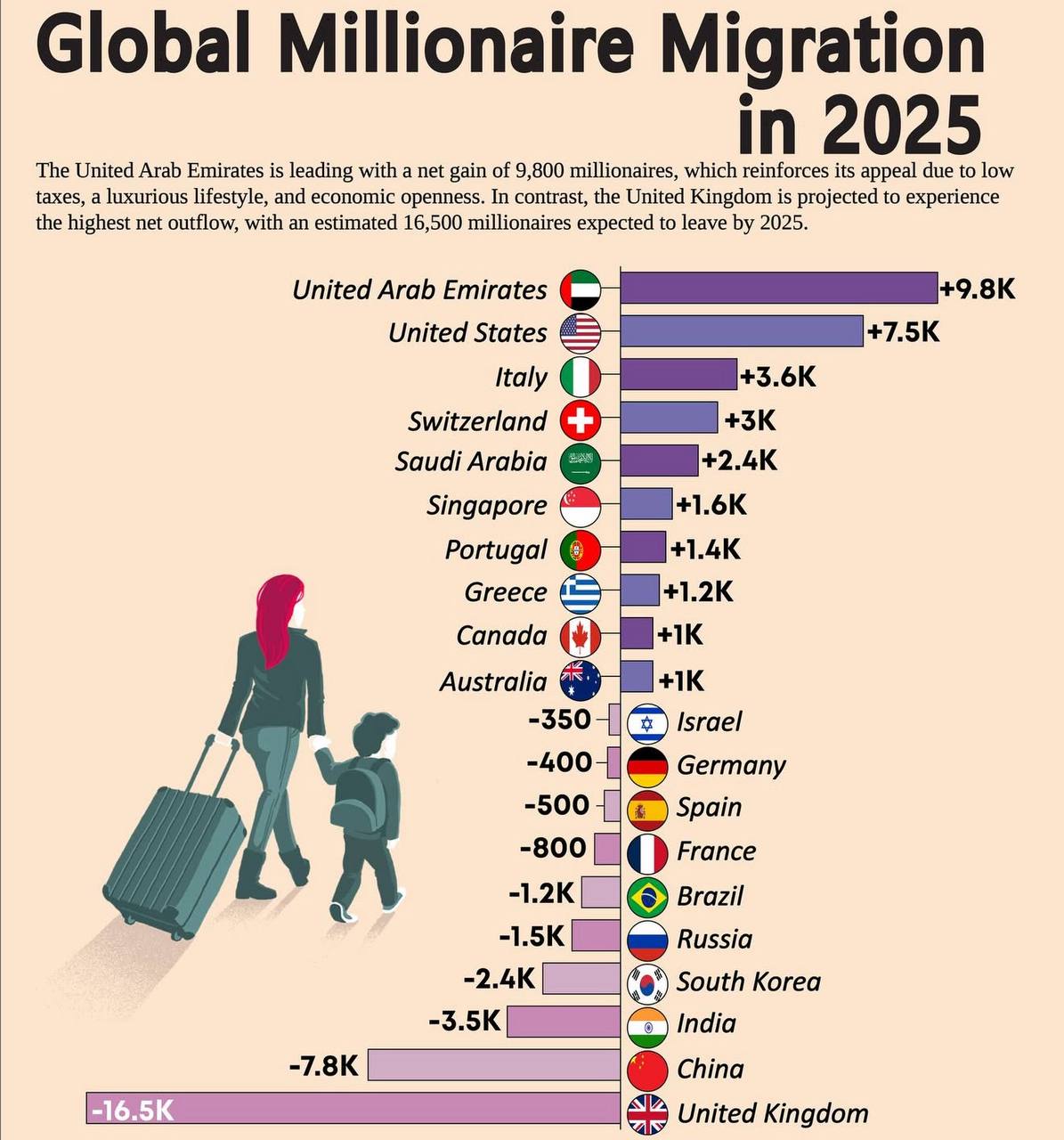
Where Millionaires Are Moving in 2025
Millionaires on the Move: Where the Rich Live Now
In 2025, the world has finally made up its mind on where the rich belong.
Spoiler: it’s not London.Why the Wealthy Are Flocking to the UAE and US
The UAE is gaining nearly 10,000 millionaires this year. The old formula of "no taxes, lots of sun" still works. The US is also attracting wealthy newcomers—apparently offering not just taxes, but Netflix in its original version. Italy isn’t luring people with low rates, but more likely with pasta and Tuscan views.
London Leads the Rich Exodus: Down 16,500
The UK is topping a much less glamorous chart: it’s losing 16,500 millionaires. That’s not a slow leak—it’s a full-on evacuation. China (-7.8K) and India (-3.5K) are also high on the list of departures, likely in search of Dubai’s sunshine and Switzerland’s chocolate.
Global Migration of Wealth: A New Map
If millionaires are a flock of birds, then London, Delhi, and Beijing have become the skies to escape from. And Dubai? The juiciest, shiniest bird feeder on the planet.
-
AI Is Reshaping Consulting: What Comes Next?
AI vs. Expertise: End of the Consulting Status Quo?
When an AI can analyze data, build a strategy, and produce a polished corporate presentation in minutes, the era of expensive human expertise is running out of time.
Even McKinsey—the very symbol of top-tier consulting—has had to rethink its DNA for the first time in a century.
Ivy League Grads Out, AI Agents In?
Instead of armies of Ivy League grads working on months-long projects, we now have thousands of AI agents writing in consulting tone, fact-checking logic, and assembling materials. Every specialist will soon come with a personal AI bot, free of charge.
Clients Want Outcomes, Not PowerPoint Decks
And the demand is shifting: clients no longer want someone in a suit delivering slides. They want a partner who’ll dig in and own the results. Already, one in four consulting projects is paid based on actual outcomes.
Who Will Survive the AI Wave?
Junior roles are under pressure. Average expertise is fading fast. What’s rising in value? Experience, the ability to learn quickly, and working well with others—things AI still can’t automate.
Consulting is entering a new era with one rule: survival doesn’t go to the smartest, but to the fastest.
-
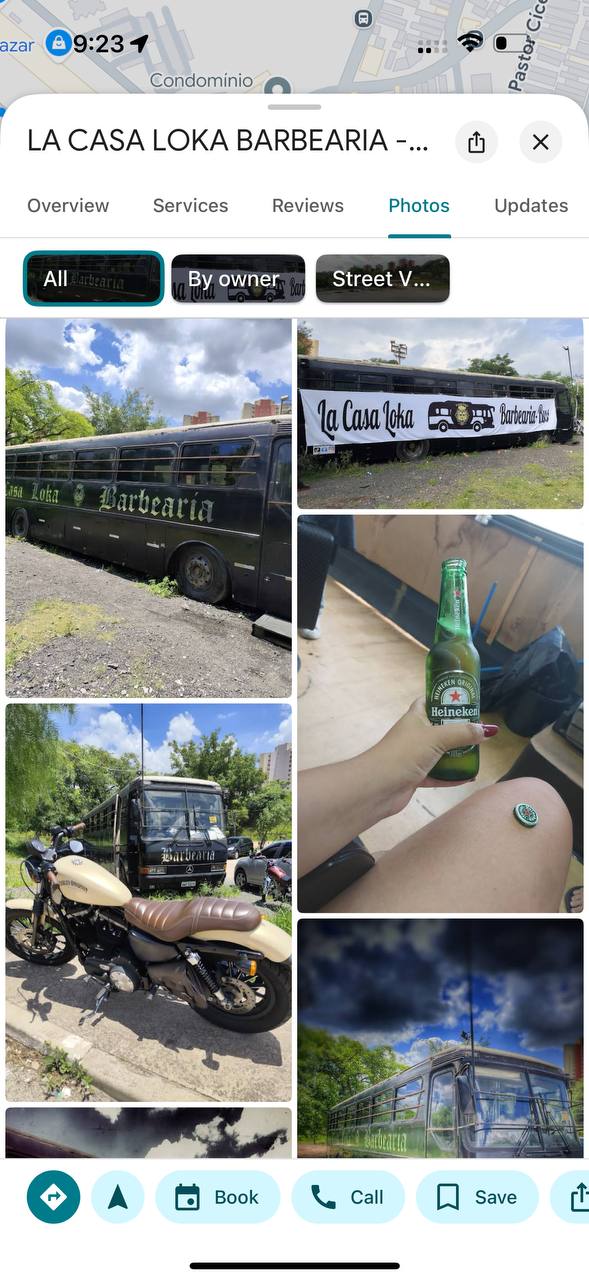
When ChatGPT booked me a haircut… in a bus
When ChatGPT booked me a haircut – and nailed it… sort of
Today I decided to test ChatGPT’s new agent mode. I’d seen a post where it worked flawlessly: someone asked to book a haircut in Los Angeles, the AI opened a browser, found a salon, made the appointment – smooth as silk.
Inspired, I tried: “Book me a haircut tomorrow in Brooklyn, São Paulo.”
Spoiler: I did NOT expect what happened next.
At first: flawless automation
At first, it was perfect. The browser opened, and the agent narrated:
“Comparing ratings,”
“Scrolling the page,”
“Clicking the booking button.”
It found a barber, asked my preferred time, paused briefly for login, then finished the booking and sent me a neat summary: tomorrow at 1 PM, 25-minute haircut.I even got the email confirmation.
It felt like the future — the kind where AI can do everything except find your missing socks.
The twist: a barbershop in a bus
But then… I checked the salon photos. And there it was: a barbershop. Inside. A regular. City. Bus.
Not “retro-themed,” not “repurposed.” Just a literal bus parked on the roadside, with stools, dust, and a hint of existential despair.
AI: mission accomplished.
Me: wondering if my next agent prompt would be “Find where they sterilize their tools.”Lesson: trust but verify
Always double-check — whether it’s a human agent or a digital one. Amen.
-
How Will the Universe End? 6 Possible Scenarios
The greatest minds are pondering the eternal again — and it might not be so eternal after all.
Big Crunch: Collapse Instead of Infinity
One recent theory suggests that if dark energy proves unstable, the Universe won't expand forever.
Instead, in about 33 billion years, it could reverse course, collapsing in on itself — the so-called "Big Crunch." Think slow-motion apocalypse.
Big Freeze: The Slowest, Coldest Ending
In this scenario, expansion never stops. Stars burn out, matter decays, and eventually even black holes vanish. Nothing remains but empty space — cosmic credits roll in pure arthouse style.
Big Rip: The Universe Torn Apart
If dark energy accelerates instead of staying steady, it could literally tear the cosmos apart: first galaxies, then planets, then even atoms. Expansion on steroids.
Big Bounce: An Infinite Cosmic Reboot
Optimists prefer this one: the Universe collapses, but instead of dying, it triggers another Big Bang — a cosmic reboot on endless repeat. Maybe we’re already in one of many cycles.
Vacuum Decay: The Instant Game Over
High-level physics mode: if our universe exists in a "false vacuum," a random quantum fluctuation could rewrite the laws of physics in an instant. No pain. No warning. Just… gone.
Boltzmann Brain: The Weirdest Possibility
Not exactly an ending, but unsettling: in an infinite Universe, random fluctuations could eventually create a single conscious brain that only thinks it’s you. Hello, cosmic solipsism.
So, if you're procrastinating, keep in mind: "later" might end in one of six cosmic apocalypses.
But hey — we've still got billions of years. Time for coffee and the comforting illusion of control.
-
Crisis Mode: Why Speed Beats Innovation in Industrial Capitalism
In crisis, speed of sale beats quality of product
When systemic crisis hits, the winners aren’t those with the best products—but those who can sell fast to whoever needs it most.
How overpriced semiconductors launched the Big Tech era
Back in the 1960s, the U.S. paid 30 times the market price for semiconductors—because the Minuteman missile program couldn’t wait. That’s how the industry that feeds today’s Big Tech was born.
Big Tech’s nuclear bet isn’t about the planet
Today, Big Tech is the urgent buyer.
Microsoft, Google, Amazon, and Meta are pouring money into nuclear energy. Not because they love the planet—but because without it, they can’t run AGI. And without AGI, they’re just expensive hardware.
The West’s defense sector is too hollow to fight
Western defense is so degraded that in a real conflict with China, the missiles would run out in days.
Global supply chain panic: rare earths, infrastructure gaps, no fallback
China controls 87% of rare earths. The U.S. has no fallback. Europe faces a €250 billion annual deficit in equipment and infrastructure.
Not a startup game—this is DEFCON 2 industrial capitalism
The world is turning into a chain of emergency purchases: from modular reactors and Atlantic cables to hurricane-predicting AIs in the Gulf.
Governments are throwing in trillions. Infrastructure is crumbling. Old corporations can’t keep up. The winner is whoever can build and deliver right now.
This isn’t a startup sandbox. This is industrial capitalism in DEFCON 2 mode.